image map Home Favorites Reading About Contact
Showing posts with label John Piper. Show all posts

What do you have to give?

So, being affectionately desirous of you, we were ready to share with you not only the gospel of God but also our own selves, because you had become very dear to us.
1 Thessalonians 2:8

I have nothing to give.

I don’t know if you ever feel this way, but sometimes I do. What do I have to give?

So I needed this shot in the arm from John Piper’s lesson on “We were eager to share with you our own souls.”

Here’s a partial list of things we as believers always have to give:

This is not a matter of personality. This is a matter of faith. Trust him, and give yourself.
~ JOHN PIPER

In all things I have shown you that by working hard in this way we must help the weak and remember the words of the Lord Jesus, how he himself said, “It is more blessed to give than to receive.”
Acts 20:35

* * *

What can you give today?

Curios—38

More Curios here1. Don’t make Jesus more of a mediator than he is
by John Piper
Because of Jesus, we can go directly to the Father.


2. Is being “church nice” really nice?
“Sounds like a lot of churches to me,” by Bill Mounce.


3. For bloggers: 5 Steps to Captivating Readers
What I liked best was this exercise:
     Describe in five adjectives the message you want
     readers to get from your blog.

4. The 40 Best TV Theme Songs of All Time
See how many you recognize.


5. The Good-O-MeterGood-o-Meter

HT: Sandy

* * *

One of those kind—taste and see

Do you know some of those kind of people? Ones that have obviously been with Jesus?

Now when they saw the boldness of Peter and John, and perceived that they were uneducated, common men, they were astonished. And they recognized that they had been with Jesus.
Acts 4:13

They have a hope, a confidence, a joy that doesn’t come from circumstances. It comes from having tasted the Lord.

I want to be one of those kind of people. You, too?

Have you tasted the word of God—especially the gospel—that the Lord is good? Have you tasted it? I am not asking: Have you thought about it? I am not asking: Have you decided to affirm it? I am asking: Have you tasted it? Are there living, spiritual taste buds in your heart that taste Christ as more desirable than all else?

This is where we need to get serious. We will spread the seed of God’s mighty regenerating power if we have tasted that the Lord is good. The Lord is our delight. The Lord is our Treasure. The Lord is our meat and milk and water and wine.
     ~ John Piper, Finally Alive

Oh, taste and see that the LORD is good!
Blessed is the man who takes refuge in him!
Psalm 34:8

* * *
More from Finally Alive

“Finally Alive”—Book review

How do you define “born again”? Do you know people who claim to be born again, but don’t live like it? Do you ever question the authenticity of your own conversion experience?

Finally Alive by John Piper John Piper wrote Finally Alive because understanding “born again” is vitally important. And because those who have been born again need to realize “it is far more glorious than many think it is.”

[And because of its importance, know this short review here won’t do it justice.]

Why do you need to know what happened to you when you were saved?
Piper says,

  • Because your fellowship with God will be sweeter and your assurance that he’s your Father will be deeper
  • Because you will treasure God, Jesus, and His Spirit more than you ever have, and this glorifies the Lord
  • Because you’ll be wider awake to authentically love everyone around you

So what does (and does not) happen in the new birth?

  • You get new life (not new religion)
  • You experience the supernatural in yourself (not just affirm the supernatural in Jesus)
  • You get a new nature (not an improvement of your old nature)

How does it come about?
Not on your own. You don’t control it.

We don’t decide to make it happen any more than a baby decides to make his birth happen— or, more accurately, make his conception happen. Or even more accurately: We don’t decide to make it happen any more than dead men decide to give themselves life.

We are so rebellious at the root of our fallen human nature that we can’t find it in ourselves to humbly see and savor Jesus Christ above all things.

So how does it happen?

It’s the call of Jesus at the tomb of Lazarus. He says to a dead man: “Lazarus, come out” (John 11:43). And the call creates what it commands.

Then what’s your part?

…exercise faith—faith in the crucified and risen Son of God, Jesus Christ, as the Savior and Lord and Treasure of your life.

Piper lists some effects of the new birth as

  • Overcoming the world
  • Regeneration, faith, love
  • Freedom from the practice of sinning
  • Loving others with the love of God [this section was particularly insightful to me]

Two ways to love others (there are many):

1. Humbly rejoice in the goodness of others

Everywhere you see some growth, some virtue, some spiritual discipline, some good habit, or good attitude, rejoice in it. Give thanks for it. Compliment it. Don’t resent it. Don’t be like Cain. Respond the opposite from Cain. Be inspired by other people’s goodness.

2. Meet the needs of others

The main way John has in mind for us to lay down our lives for each other is that we share what we have. Love doesn’t think possessively. Love knows that everything belongs to God. We are only managers of his possessions.

To meet the needs of unbelievers, help them be born again. Piper lists
Ten Encouragements for Gospel-Telling:

  1. Know this: God uses clay pots
  2. Get resources to share
  3. Know that God may use many influences
  4. Be a lavish giver
  5. Find people interesting
  6. Invite people to church
  7. Fill the city with gospel teaching
  8. Use your giftings
  9. Read books on evangelism
  10. Pray for boldness

As is typical of Piper, he writes plainly and passionately in this book. He also uses an abundance of scripture to back what he believes. So even if you don’t agree with something, you’re at least required to think it through based on your own interpretation of scripture. Then if you still disagree, at least you know why.

Piper first preached much of this material in his sermon series at Bethlehem Baptist. (I listened first; read the book second.) The book is accompanied by a study guide (free online) which links to even more material on-line to coordinate with each particular lesson.

I recommend new Christians and older Christians alike read this book, along with interested unbelievers, even if you think you’ve already got the new birth already figured out. You will come away with a clearer understanding and appreciation of your salvation and your Savior.

* * *

More reviews on Piper books I love:

10 Top Life-Changing Books

I am shaped by words…specifically, The Word.

I become what I study; I am what I read.

Word has chiseled me, stretched me, connected me, hammered me, compelled me, rebuilt me, and intensified me.

I can’t explain why, using exact words, but
these 10 books
have moved me the most,
from there to here.

1. The Holy Bible 
It’s the master source for all other words.
Without this Word, there would be no others. 

Desiring God by John Piper 2. Desiring God: Meditations of a Christian Hedonist
     by John Piper
It taught me that my greatest pleasure would come through loving God. And invited me with a subtle urgency to go all out in seeking Him, for my good and His glory.

Celebration of Discipline by Richard J. Foster 3. Celebration of Discipline: The Path to Spiritual Growth
     by Richard Foster 
I wandered into spiritual disciplines through the back door. This book laid out a structure that fit, keeping me better positioned for God to change me.

The Practice of the Presence of God by Brother Lawrence 4. The Practice of the Presence of God 
      by Brother Lawrence
Little things count. I learned here how a monk long ago turned the most menial tasks into glory for God. And how I can attempt that, too.

The Search for Significance by Robert S. McGee 5. The Search for Significance: Seeing Your True Worth through God’s Eyes
     by Robert S. McGee
When I question my worth or my purpose, I still get this book out to remind myself in specific ways what God’s Word says about me instead.

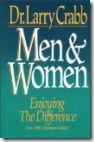
Men and Women by Larry Crabb 6. Men and Women: Enjoying the Difference
     by Larry Crabb
After a fight with my sweetie, this book has brought me to repentance over and over. It also taught me to use my God-given, distinctive resources as a woman to better serve and give to my husband. 

Forgive and Forget by Lewis B. Smedes7. Forgive and Forget: Healing the Hurts We Don’t Deserve
     by Lewis B. Smedes
When I had a biggie to forgive, this book showed me how. And why. It sped up my healing.

8. Free in Christ  
     by Cecil Hook
It was the first book that cracked the veneer of my religion’s legalism, years ago. And I wiggled out, free, never to return to the same bondage again.

Lies Women Believe by Nancy Leigh DeMoss 9. Lies Women Believe: And the Truth that Sets Them Free
     by Nancy Leigh DeMoss
This book (not just for women) taught me to recognize the subtle and not-so-subtle lies that Satan tricks us into believing. And how to counteract them with truths from the Father.

Face to Face by Kenneth Boa10. Face to Face: Praying the Scriptures for Intimate Worship
     by Kenneth Boa
I use it several times a week. It helps me vocalize my own prayers using scripture itself.

* * *

What books have changed you?

Related:

“A Hunger for God”—Book review

A Hunger for God by John Piper Yes, we know:
If you snack too much, you won’t be hungry for supper.
Yet we do it anyway.

What about with God? Do we overdo the junk food (satisfying worldly appetites) so that we’re left with no appetite for the satisfying things of God? John Piper argues yes.

In A Hunger for God [download a free copy], Piper says we can re-awaken our appetites through fasting. Delighting more in the Giver; less in the gift.

Food is good. But God is better. Normally we meet God in his good gifts and turn every enjoyment into worship with thanksgiving.

But from time to time we need to test ourselves to see if we have begun to love his gifts in place of God.

The reward? God himself.

Fast to glorify him, for his will to be done, for his name to be honored. Not to win admiration from others. Not to earn brownie points from him. (You can’t negotiate with God.)

As we let God satisfy us, we will be restored not only to serve him, but also to serve others. Isn’t it interesting that three famous men in the Bible who fasted (Moses, Elijah, Jesus) are also three who were used to miraculously feed others?

In A Hunger for God, Piper works through Isaiah 58 to show that our fasting is not merely to deny ourselves, but to supply the needs of others. When we fast, we are to feed the hungry; house the homeless; satisfy afflicted souls;….

And the rewards from fasting will come: light out of darkness; physical strengthening; continual guidance; soul satisfaction; ….

God rewards fasting because fasting expresses the cry of the heart that nothing on the earth can satisfy our souls besides God. God must reward this cry because God is most glorified in us when we are most satisfied in him.

* * *

Curios—25

More Curios here

1. Twelve tips for reading more by Gretchen Rubin12 tips for reading more

Twelve great strategies from Gretchen Rubin on how to get more good reading done.

Like, 1. Quit reading. 4. Skim. 5. Get calm. 7. Always have something to read. 8. Maintain a big stack. 10. Read at whim!


2. Who do you imitate? The 1st century church or Christ?

From The Restoration of Discipleship by Brian Mashburn. Read it all here.

There is such a huge difference between a religion that seeks to help people imitate Jesus Christ in heart, character, priorities and mission and a religion that seeks to imitate the historical church's external worship practices, belief systems, gathering habits, life philosophies and superficial doctrines.


How simplicity is screwing you by Brett Kelly3. What is your quest for simplicity doing to you?

Is simplicity making you lazy? Do you admit defeat at a problem too quickly because it’s “hard”?

Read Brett Kelly’s take on “How Simplicity is Screwing You.”


4. Argue against anxiety

By Justin Taylor: 
1. God is near me to help me (Phil 4:5-6)
2. God cares for me (1 Peter 5:7)
3. My Father in heaven knowns all my needs and will supply all my needs (Matthew 6:31-33)

Read all 8 here.


5. Which preachers have influenced you the most?

Protestant pastors chose these as their top 10 influential living preachers.

billy-graham-most-influential1. Billy Graham
2. Charles Swindoll
3. Charles Stanley
4. Rick Warren
5. John MacArthur
6. Barbara Brown Taylor
7. David Jeremiah
8. Max Lucado
9. John Piper
10. Andy Stanley

Who would you add?

* * *

Curios—22

More Curios hereWhy do so many NFL players go bankrupt__from Sports Yahoo 1. Why do ex-NFL players go bankrupt?
If they get paid millions, then why, within two years of retirement, are almost 80% of NFL players out of money? I’m just asking. Chris Chase answers.


2. How to get a 3-D faith
Mark Batterson shares about sin deterrents and faith accelerators.


3. Could today be your “day before”?

We all live the days before. We are living them now.
There was a day before 9-11.
There was a day before your child told you she was pregnant.
There was a day before your wife said she’d had enough.
There was a day before your employer said “lay offs.”
We are living our days before. We are living them now.

Read the whole thing by Michael Spencer.


4. Pick a memory verse
John Piper speaks out on how to choose scriptures for memory. Read here. Or listen below. Video__John Piper on choosing memory verses


5. 8 Traits of a Good Teacher
Justin Taylor summarizes eight traits of a good teacher, taken from The Marks of a Spiritual Leader (1995), another Piper classic.

Curios - 20

Read more Curios

1. God, tell me where to go
Are you where God wants you to be? Are you sure? Need a sign? This one is good.

If you don’t read this blog by Jon Acuff, Stuff Christians Like, you’re missing out. Spiritual humor with an insightful edge.


2. How many at one time?  
Are you a media multitasker? Are you doing multiple things right now? E-mail going? Twitter up? Multiple tabs?

You might need to stop everything you’re doing and give this one your full attention.

Quote from Clifford Nass


3. I like it
But I’m a woman, if that makes a difference. I don’t necessarily want it to change. But is it different for a man? Listen to Matt Redman address the issue of romantic language in worship songs.


David Powlison

4. I fight because…
“Why do you fight? It’s not ‘because of my wife/husband…’—it’s because of something about you.” ~ David Powlison

Listen to this short interview with David Powlison and C. J. Mahaney. Better still, listen to all four mini-interviews. They’re worth your time.


5. Are you
too balanced?
Are you playing it safe in your Christianity? Too safe? Pastor Francis Chan from Cornerstone Church, author of Crazy Love, gives a great visual lesson you’ll remember.


6. Do the little words count?
What do you do with the ones that just don’t quite fit the text when you’re reading your Bible? What if they just disappeared?

John Piper explains the importance of using a Bible translation with all the words during his weekly sermon.

Good advice or Good news?

good_advice_or_good_news You want good advice or good news?

John Piper relays this illustration, preached by Doug Wilson, on the difference between good advice and good news.

Good advice is a teacher saying to her class, “Study hard. Memorize your paradigms. Do your homework and get it in every night. And then I think you’ll do fine on the final exam and the passing of this course.”

All that is really good advice.

Then the exam comes and this teacher is walking down the aisle and she sees this young fellow sitting over a blank piece of paper, not able to write anything on the final exam.

She stops and says more good advice. “Try to remember everything you studied. Give yourself attention  here and just relax.”

That’s all very good advice.

But if she says, “Why don’t you scoot over and I’ll take the test for you.”

 That’s good news.

Good advice is important. We want it. Need it. The Bible is full of it.

But we don’t want to be like the Jews in Jesus’ day who searched the scriptures looking for good advice—on eternal life—but when Eternal Life Himself (i.e. Good News) showed up, they refused to come to him (John 5:39-40).

Don’t miss the Good News by focusing only on the good advice.

When Christ says, “Scoot over and I’ll take the test for you,” let him. He’ll pass it with flying colors. And you’ll get the A+.

* * * * *

The light of the eyes rejoices the heart, and good news refreshes the bones.
Proverbs 15:30

And the angel said to them, "Fear not, for behold, I bring you good news of great joy that will be for all the people.
Luke 2:10

And the winner is…Wrap-up of Spring Reading Thing

The Spring Reading Thing ends today!

And I crossed the finish line! I finished reading all the books on my list—but only because they were on my list. I might have ditched a couple after 50 pages (my cut-off evaluation point) had I not committed to reading them (Hospitality and Intercession, for example), but in the end, every single book was worth the time.

winner spring reading thingAnd now, the book and author winners from my list of 
Spring Reading Thing 2009!

BOOKS
Most recommended for YOU to read
The Love Dare
by Stephen & Alex Kendrick

Why? Because it’s so practical, so every day, so needed. It’s an invitation to step outside yourself, past your comfort zone, into Christ’s world of self-surrender. It’s more than a book to read; it’s a book to change who you are.

Most inspirational
Real Christianity by William Wilberforce
coupled with Amazing Grace in the Life of William Wilberforce by John Piper

Why? William Wilberforce is a great example of perseverance and sticking with your core beliefs, no matter what. He never compromised in his battle to end the slave trade in Britain.

Most personally challenging
A Christian View of Hospitality
by Michele Hershberger

Why? It still hasn’t left me. It’s a book I had for a few years and couldn’t make myself read. But my list inspired me to finish it. I’m glad I did because it’s making me rethink hospitality in broader ways than just inviting people over for supper.

Most frustrating
Surprised by Hope
by N.  T. Wright

Why? The syntax, the concepts, the loops. But much food for thought. Mental and spiritual exercise is important. I'll try to read it again. Later.

AUTHORS
Most encouraging
Tim Hansel

Why? Despite pain, hardship, struggles—he chooses joy. He drinks from the Living Water.

Favorite new authors
Leigh McLeroy (The Beautiful Ache) and Sue Monk Kidd (Firstlight; The Secret Life of Bees)

Why? Their writing is very similar—they spiritualize the everyday stuff. That’s what I need. That’s where I live.

Most convicting
John Piper (This Momentary Marriage; Amazing Grace in the Life of William Wilberforce)

Why? No matter the subject he’s writing about, Piper always challenges me to find greater satisfaction and joy in God. In This Momentary Marriage, he introduced me to an even deeper, more spiritual view of marriage than I’d ever had before. Read it!

* * * * *

What I learned from The Spring Reading Thing:

  • I learned that if I commit to read a book to the end, that it can pay off. But not always.Use good judgment.
  • I learned that I miss my library books and the randomness with which book selections come to me.
  • I learned that it feels good to dust books off my shelves that have been sitting unread for too long.
  • I learned that God has so much he wants me to learn from others (well, I really already knew that).

The power and number of words never ceases to amaze me. Thanks, Katrina at Callapidder Days, for encouraging us to jump into that bottomless pit of books. It’s a journey I never want to end.

~ Read other wrap-ups from Spring Reading Thing 2009

Curios - 13

television
1. Do you ever say this?: “I just need more time!” Then read “How much is watching TV costing you?”


2. Stephen was the first Christian martyr. Where do we rank now in the history of martyrdom? Check out this visual.


lloyd-jones 3. “Never look back at your sins again.” Ray Ortlund posted a paragraph by D. Martin Lloyd-Jones on finding true happiness.


4. This will give you chills. John Piper on abortion: “No, Mr. President. Killing is killing no matter what you call it.” Read the text here. Watch it below.

Gallup Survey: for the first time since the poll began in 1995, more Americans (51%) call themselves "pro-life" than "pro-choice" (42%).


Book Review: “This Momentary Marriage”

Bigger than you

I finished this John Piper book about a week ago. It’s been simmering. Because it’s big. It’s not a book for the weak-hearted or the feel-goods. And neither is it a book only for the married.

wedding ringsIt’s a book for everybody who lives either in a marriage or around marriages. All of us.

Every marriage is bigger than the two people in it. Much bigger. God designed the marriage relationship to humanly reflect the covenant relationship between Christ and the church.

Do we weight marriages with the seriousness of that larger relationship? It’s never about just us. As always, it’s about him.

Be married for God’s glory, not just for your own happiness. “God gets glory when two very different and very imperfect people forge a life of faithfulness in the furnace of affliction by relying on Christ.”

A parable

Marriage among Christians is mainly meant to tell the truth about the gospel—that Christ died for his church who loves him and [he] never breaks his covenant with his bride.

In essence, Jesus says,...“I have come to show you the drama that marriage was meant to represent in my sacrificial, covenant-keeping love for my sinful bride. I have come to give you the power to stay married, or to stay single, so that either way you keep your promises and show what my covenant is like and how sacred is the covenant bond of marriage.”

Marriage is “a parable of permanence written from eternity about the greatest story that ever was. The parable is about Christ and his church.”

Not about staying in love

Over and over Piper reiterates that “staying married is not mainly about staying in love, but about keeping covenant....Staying in love isn’t the first task of marriage. It is a happy overflow of covenant-keeping for Christ’s sake.” We are in this covenant because God has joined us together; he is the main actor in the event of marriage. Who are we as humans to break the sacred union that God has created?

Although this is not a practical handbook of “how to improve your marriage,” it does makes you think about your daily attitudes. Example: If you think your anger against your spouse is too big to overcome, imagine the enormosity of wrath that God could hold against you. Yet he doesn’t. He forgives us and bears with us; can we do the same with our spouse?

“Let the measure of God’s grace to you in the cross of Christ be the measure of your grace to your spouse…Forgiveness says: I will not treat you badly because of your sins against me or your annoying habits.”

Focus long-term

Piper wastes no words on selling the beneficial effects of marriage on employment or poverty or health. He chooses not to focus there. Instead, “make God and the glory of his Son central, and you get the practical effects thrown in. Make the practical effects central, and you lose both.”

He concludes that marriage is a momentary gift. It may be filled with bright days or covered with clouds. Either way, it is short. Stay focused on God in it.

If we make secondary things primary, we will be embittered at the sorrows we must face. But if we set our face to make of marriage mainly what God designed it to be, no sorrows and no calamities can stand in our way...The beauty of the covenant-keeping love between Christ and his church shines brightest when nothing but Christ can sustain it.

this momentary marriage_john piperI recommend this book for those happily married, for those hanging by a thread, and for those who are single. We owe it to the Father and to each other to bolster the importance of marriage in our circle of friends and family. Buy it or read it free on-line.


UPDATE (5/18/09):

Here's another perspective of this book as reviewed by Tim Challies.


Chapter by Chapter Reviews

Cross He Bore, The: Meditations on the Sufferings of the Redeemer. Fredrick S. Leahy

Mere Christianity. C. S. Lewis

Real Christianity: Discerning True Faith from False Beliefs. William Wilberforce

Spectacular Sins: and Their Global Purpose in the Glory of Christ. John Piper

Book Review: “Amazing Grace in the Life of William Wilberforce”

Short (only 76 pages). amazing_grace_wilberforce_piper
Sweet.
Inspiring.

William Wilberforce is best known for his enduring fight against the British empire to first abolish the African slave trade, then outlaw slavery altogether. It encompassed almost 46 years of his life, from 1787 to 1833, ending in victory three days before his death.

What keeps a man fighting so long, when he meets defeat after defeat, for years on end? It was not political correctness or people-pleasing or social justice without a cause.

Wilberforce persevered for eternal reasons—first, to please God; second, to help mankind.

As Wilberforce would say: “You can’t endure in bearing fruit if you sever the root.”

He lived out Micah 6:8, “He has told you, O man, what is good; and what does the LORD require of you but to do justice, and to love kindness, and to walk humbly with your God?” In his fights for justice (more than just anti-slavery), he linked social good with eternal good.

John Piper, in his typical fashion, authors this book with clarity, stressing the main points so you can’t miss them, and sharing enough anecdotes about Wilberforce to keep it personal. He suggests you read Wilberforce’s own book first (The Practical View of Christianity a.k.a. Real Christianity) so you can understand the Biblical passion that made him tick. (It's helpful, but not a prerequisite. I’m on the last chapter—close enough? )

But even if you read nothing else by or about Wilberforce, read Piper’s Amazing Grace (free on-line). It’s enough to inspire you to make a difference where you are, in the time that you’re in, for as long as it takes.

Piper’s last paragraph sums up the bigger picture of Wilberforce's life to include us:

  • Never minimize the central place of God-centered, Christ-exalting doctrine
  • Labor to be indomitably joyful in all that God is for us in Christ by trusting his great finished work
  • Never be idle in doing good—that men may see our good deeds and give glory to our Father who is in heaven (Matthew 5:16).

God and the control of sin, Pt 2 (from "Spectacular Sins")

-continued-

Question:
3. What role did God play in the most spectacular sin of the murder of Jesus?

Answer:
But first, more questions:
Is allowing something the same thing as controlling it? Does predicting it make you responsible for it? If you have the power to prevent it, but don’t exercise your power, is that equal to causing it?

God did allow every piece of the puzzle to fit, through time and place, for Jesus’ death. And he certainly had the power to prevent any of the smaller sins that led up to the ultimate sin of Jesus being crucified. Jesus himself said that he could have appealed for legions of angels, but he didn’t (Matthew 26:53-54).

And God certainly predicted Jesus’ death throughout scripture, even down to the details (Psalm 118:22; Matthew 21:42; John 15:25; Zechariah 13:7; Matthew 26:31; John 19:34-37; John 13:18; Zechariah 11:12-13; Mark 10:33-34; Matthew 26:24).

So was he responsible for it? Did he cause the death of his own son? Piper phrases his answer “carefully and with trembling,” to properly echo the Bible’s own phrasing of the answer, that “the invisible hand and plan of God are behind these most spectacular sins in all the universe...(Acts 4:27-28).”

I conclude that yes, God was responsible for Jesus’ death. If he had not been, then what’s the gift?

If you happen upon $1 million in the road, I can’t take credit for giving it to you. But if I write you a check for it, then the gift is from me. If God did not give us Jesus’ death, then it was only through fateful circumstances that it happened, and no proof of his love.

God did give the gift to us. He executed the giving through no sin or wrong-doing or unrighteous of his own. And he continues to sustain our lives through continual cleansing.

Why should this matter to us? “If you separate God’s activity from the death of Jesus, you lose the gospel. This was God’s doing. It is the highest and deepest point of his love for sinners. His love for you.”

I don’t want to lose the gospel. Thank God we can’t lose his love.

God and the control of sin, Pt 1 (from "Spectacular Sins")

We all suffer. Sometimes big. Sometimes barely noticeable.

Where is God in those times? When when we’re affected by terrible sin, either through fault of our own or from others or from our fallen world, what do we think about God then?

Do we see God as a passive observer who feels sorry for us, but whose hands are tied? Do we view him as wishing, wishing, wishing that it were not this way, but powerless to change things?

Or do we see him as sovereign and active, helping us prevail no matter what, knowing that he’ll strengthen us to face even intense suffering with courage?

Since Jesus proved he could control weather while he was on earth, control diseases in bodies, control physics and chemistry and biology and every other science, and even control death, what control, if any, does he have over sin?

In the final chapter of Spectacular Sins, John Piper explains how God made even the most unfathomable, gigantic sin serve his purposes to glorify his Son and to save his people. It's vitally important how we frame this because it can have “a profoundly practical effect in making you strong in the face of breath-stopping sorrows and make you bold for Christ in the face of dangerous opposition.” [And I certainly won't do it justice here.]

The most spectacular sin ever?
Murdering God.

At whose betrayal?
Judas (Luke 22:3).

Questions:
Piper works through three questions we think, but don’t always ask, about this sin. (Perhaps because they come dangerously close to this question, “What would I have done if I had been there?”)

1. Did Judas have a choice? What kind of control did he have, or was he being controlled? Was he really a good man until manipulated by Satan?

2. Why would Satan do this anyway—didn’t he know Jesus would resurrect, resulting in Satan’s ultimate defeat? Was this sin under his own control or under God's control?

3. What role did God play in this spectacular sin?

Answers:
1.
Judas was a thief already (John 12:6), even though he was one of the chosen twelve. Plenty of modern-day examples show that being in the inner religious circle is no guarantee of holiness. Satan loves to work side by side with sons of disobedience (Ephesians 2:1-3).

“Satan does not take innocent people captive. There are no innocent people.” Judas was no innocent man to begin with. Neither are we. He had already given up control to Satan.

2. When Jesus predicted his death, Peter adamantly opposed it, only to be rebuked by Jesus in a most serious way, “Get behind me, Satan!” (Matthew 16:23).

So did Satan oppose Jesus’ death at first? Because the long-term implications of Jesus' resurrection would be suicide to Satan's own demonic power? I don’t know.

Satan was not powerful enough to stop God's gift to us through the death and resurrection of Jesus. Piper suggests that when Satan realized he couldn’t stop the death, he tried to “at least make it as ugly and painful and as heartbreaking as possible. Not just death, but death by betrayal. Death by abandonment. Death by denial. Death to torture.... a spectacular sequence of sins.”

3. But what about God? What role did he play? Continued here...

Why did God give his people an earthly king? (from “Spectacular Sins”)

Can you imagine telling God you need a different Savior? Jesus is nice and all, but he’s too shadowy, you might say. You need one that you can take a photo of, get an autograph from, maybe even vote on every few years.

That’s what the Israelites did when they begged for an earthly king, even though God had already proved faithful in that position (1 Samuel 8:7-8). This sin was a doozy.

But was God taken off guard by their request? Was he forced into Plan B to accommodate their sin?

Obviously not. Scriptures like Deuteronomy 28:36 and 1 Samuel 2:10 mention kings, long before there were kings in Israel. God knew it was coming. Jesus was to be born through a bloodline of physical kings to be the King of kings.

So why didn’t God just start off that way? Begin the nation of Israel with King Abraham or at least King Moses? Why wait around a few centuries for them to ask for one through sin?

This is the question of chapter 7 of Spectacular Sins. John Piper proposes there were 6 lessons God wanted us to learn from their asking for a king, and from God giving them one:

1. It reminds us how rebellious and unthankful we can be (1 Samuel 12:7-13).
In other words, don’t think, “I would have been above this.” Um, not likely. “Even as Christians, we are not steadfast in our affections for God. We have thankful days and unthankful days. And even our thankful days are not as thankful as they should be.”

2. Remember that God is always faithful to his own name (1 Samuel 12:22).
Not for my sake or for your sake—for HIS sake.

3. Because God is faithful to his name, we benefit—we receive his grace. (1 Samuel 12:19-22)
...because of who HE is, not because of our worth. He is grace personified and he cannot deny himself (2 Timothy 2:13).

4. Kingship belongs only to the Lord.
God proved he was enough when he began his relationship with his people with no earthly king. When they asked for one anyway, they were rejecting perfection to settle for less (1 Samuel 8:7). How well did that work out for them?

5. A God-Man must be King.
All human kings failed...until the perfect King came along, who was both man AND God. God was restored as the true and only King once again.

6. The King must die for his people.
Sin cannot be overlooked; it has to be dealt with. Through death. But God can’t die. So God became man. And when this King rose again, it was to be king not only over the Jews, but to be King over all (Revelation 19:16).

Can I agree with certainty that these reasons are the definitive answers why God worked into his plan the spectacular sin of the Israelites asking for a king? No. But these reasons are valid arguments; they glorify the Father and Son; and they are valuable lessons to learn. That’s enough to rest my mind.

Next week, the final spectacular sin...any guesses?...

Free Stuff


3. Christian Audio Books

If you like audio books, here’s a great deal. Each month, get a free download of a premium Christian book. This month’s offer: Spiritual Disciplines for the Christian Life by Donald S. Whitney. Search the site for other free resources as well. I subscribe to their “First Chapters” podcast for unabridged first chapters of audio books.


2. ESV Study Bible

For the month of March, have free access to the widely-acclaimed ESV Study Bible online. Then decide if you want to purchase, or just let it expire. I like the Study Bible I already have, but it’s NIV. And I’m a huge fan of the ESV ever since reading The Word of God in English by Leland Ryken a few years ago. So I'll take this opportunity for a trial run to see if it’s worth buying yet another new Bible.


1. Desiring God

This is my most favorite ministry site on the web.

Free. I’ve never understood it. But Desiring God gives stuff away all the time online. I first read the book Desiring God online, which led me to buy a hardcopy. I knew it was good enough for a second read.

So you might think: okay, offer an older book free for online reading. Big deal. But they offer their brand new stuff for free, too. One of John Piper’s newest, Finally Alive, is also free for the reading.

They encourage you to spread their free resources around, as long as you keep them intact and as long as you don’t charge for them.

Why?

I think it’s because they really believe in their mission: to produce and distribute resources that spread a passion for the supremacy of God in all things for the joy of all peoples through Jesus Christ.

Here’s how it works for Desiring God:

In general, let’s sell what is packaged, and give what is wired. That is, sell books, CD’s, booklets, etc., but make all that can be read, heard, or downloaded over the internet free.

Rationale: I know that all choices about what to sell and give are going to be somewhat arbitrary. But this distinction between what is packaged and what is wired is not entirely arbitrary. We distinguish between paying for the gospel, on the one hand, and paying for material objects that contain the gospel, on the other hand. We would rightly stumble over the former but accept the latter.


As technology progresses and the gospel containers change, this particular distinction will eventually become obsolete. But the principle of not requiring people to pay for the gospel will continue to govern the way we finance our spreading strategies. And as we look to the future we are not looking for new gospel containers to sell but rather new, innovative ways to make the gospel more freely available.

You’ll find literally hundreds of articles and sermons and books and other resources, all for no charge. And almost in real-time. When they host seminars, they twitter and blog at the events, and usually post audio (yes, free) within 24 hours. Video follows shortly. I’ve never been to another seminar (church or otherwise) where their speakers’ lectures are made available for free immediately after they're given (well, except for every Sunday morning at our church!).

I realize not every ministry can afford to give away what they can make money on. But as technology changes, and in many cases reduces, our own costs, I pray that we’ll rethink the way we charge for access.

In the meantime, I thank God for ministries like these. Our Savior is worth more to us than all the money in the world, so let’s provide access to Him as freely as possible.

How can salvation come through slavery? (from “Spectacular Sins”)

In chapter 6, “The Sale of Joseph and the Son of God,” John Piper lays out the backstory of God covenanting with Abraham, promising blessing, but only after affliction for 400 years.

So how would the people of God enter into a 400-year stay in Egypt? Through a spectacular sin.

Joseph’s brothers sell him off as a slave, little realizing that “in the very effort to destroy this dreamer, they are fulfilling Joseph’s dreams. Oh, how often God works in this way! He takes the very sins of the destroyers and makes them the means of the destroyers’ deliverance.”

It’s happened with me. It’s happened with you. In God’s grand scheme, something we deem a horrible kink in our life’s thread later becomes an integral turning point of the pattern.

In our book study, The Preacher’s Wife compares Joseph to Frodo in The Return of the King. Frodo’s deliverance to the very place he wanted to end up in Mordor was thanks to the paralyzing spider bite of Shelob, which brought on his rescue by a band of orcs. [Watch the battle clip here.]

So what does God want us to learn about salvation through slavery?

1. God knows how to preserve life, often through unexpected means. “God summoned the famine (Psalm 105:16-17). And God prepared the deliverance. And he did it through a spectacular sin.” Which men did he use to get rid of Joseph? The very men that he was trying to save. (Genesis 45:5). Sound familiar?

2. What man designed for evil, God designed for good (Genesis 50:19-20).
“Notice it does not say that God used their evil for good after they meant it for evil. It says that in the very act of evil, there were two different designs: In the sinful act, they were designing evil, and in the same sinful act, God was designing good.”

Again, sound familiar? The story of Joseph foreshadows Christ’s glorious use of the most murderous sin for our saving grace.

How? Piper gives 3 ways:

First, God brought deliverance after sin and suffering. Who should be surprised, then, that brutal suffering and slanders were brought against Jesus prior to the deliverance?

Second, the suffering one is righteous. As Joseph was (mostly) righteous, Jesus was certainly perfectly so. Despite being mistreated, the suffering one for righteousness’ sake is always vindicated by God in the end.

Third, the scepter will not depart from Judah. Through preserving the Hebrew people, God was preserving the blood line of Judah through which the ultimate Lion of Judah was to come, to rescue not only the Hebrews, but all people wanting rescues.

In our Book Study, Lisa at The Preacher's Wife asked us to answer two questions this week:

1. Describe an event in your life intended as both evil and good. Are you allowing God’s purposes to prevail or have you been content in accepting the evil consequences?

2. Joseph was faithful no matter what. Are we being faithful in less than desirable situations so that God can make the most of them? How are lives being preserved as a result of your experience?

Think of your own answers, then check back later in the week to be encouraged by the testimonies that will be shared there.

LinkWithin

Related Posts with Thumbnails